

Mezcal is made by roasting the heart of the agave plant, crushing it, fermenting the juice and fibers, and distilling the result. The traditional process takes weeks, and the agave itself can take anywhere from 6 to 25 years to grow.
Most mezcal is still made by hand in small family distilleries called palenques. Every step leaves a mark on the flavor, which is why two mezcals from the same agave can taste completely different.
Tileño is made in Oaxaca, the heart of mezcal country. Here's how agave becomes mezcal, step by step.
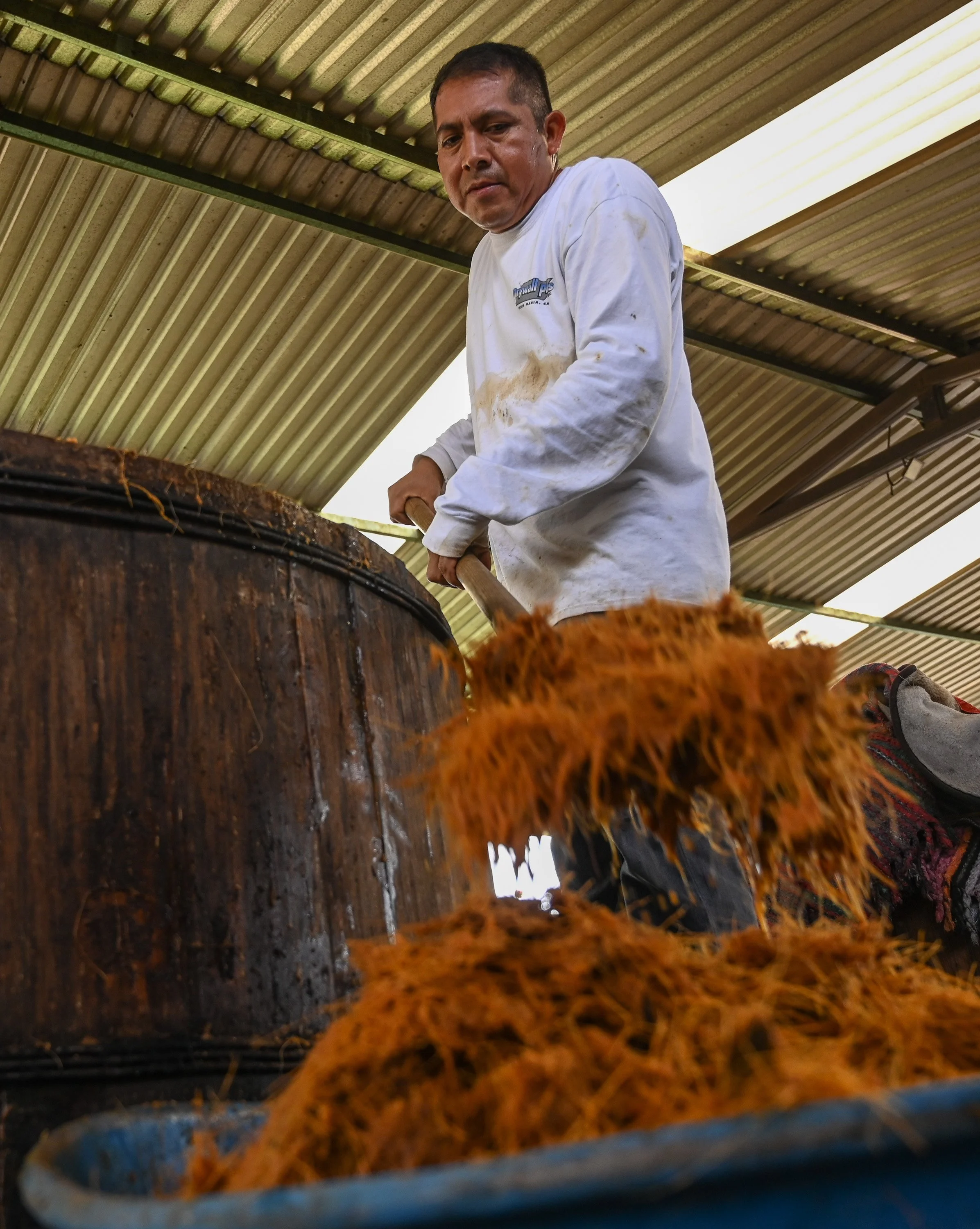
The six steps of making mezcal
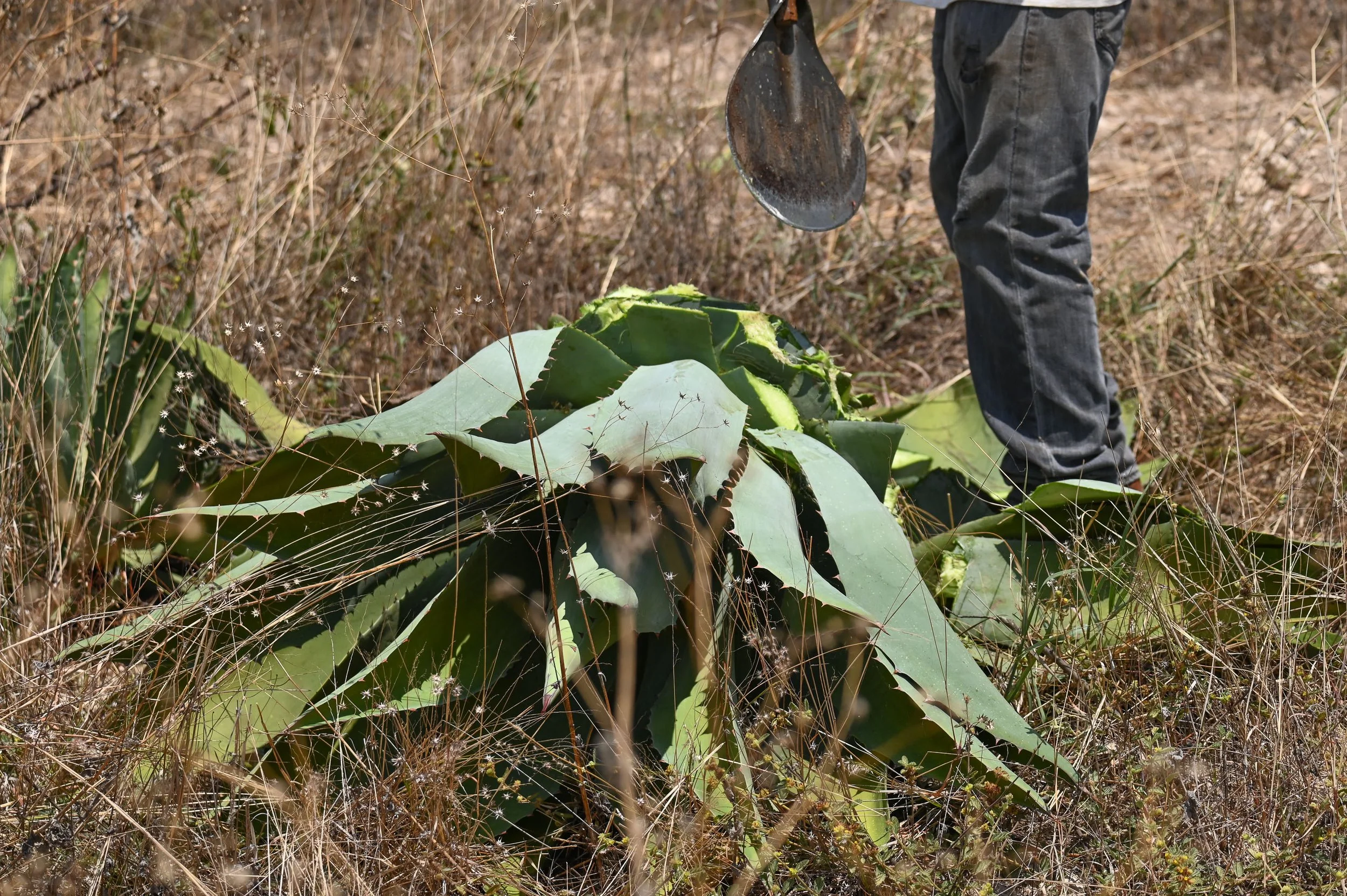
1. Harvest the agave
Mezcal starts with a mature agave, cut down by hand. The harvester uses a sharp blade called a coa to strip away the long, spiky leaves. What's left is the piña, the dense heart of the plant, which can weigh anywhere from about 20 to more than 200 pounds. Cultivated Espadín is ready in about 6–8 years. Wild agaves like Tobalá and Tepeztate can take 12 to 25 years or more.
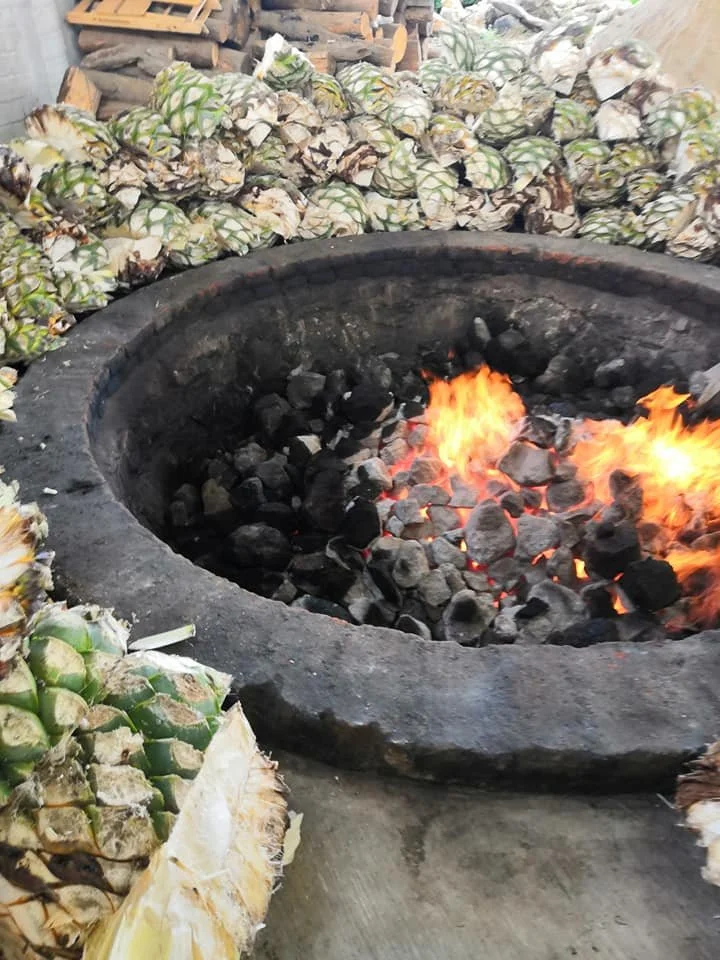
2. Roast it in an earthen pit
The piñas are roasted for several days in a cone-shaped pit dug into the ground. The pit is lined with firewood and river stones, which are heated until they glow. The piñas go in, then they're covered with agave fibers and earth to trap the heat. The slow roast turns the agave's starches into sugars and gives mezcal its sweet, smoky character.
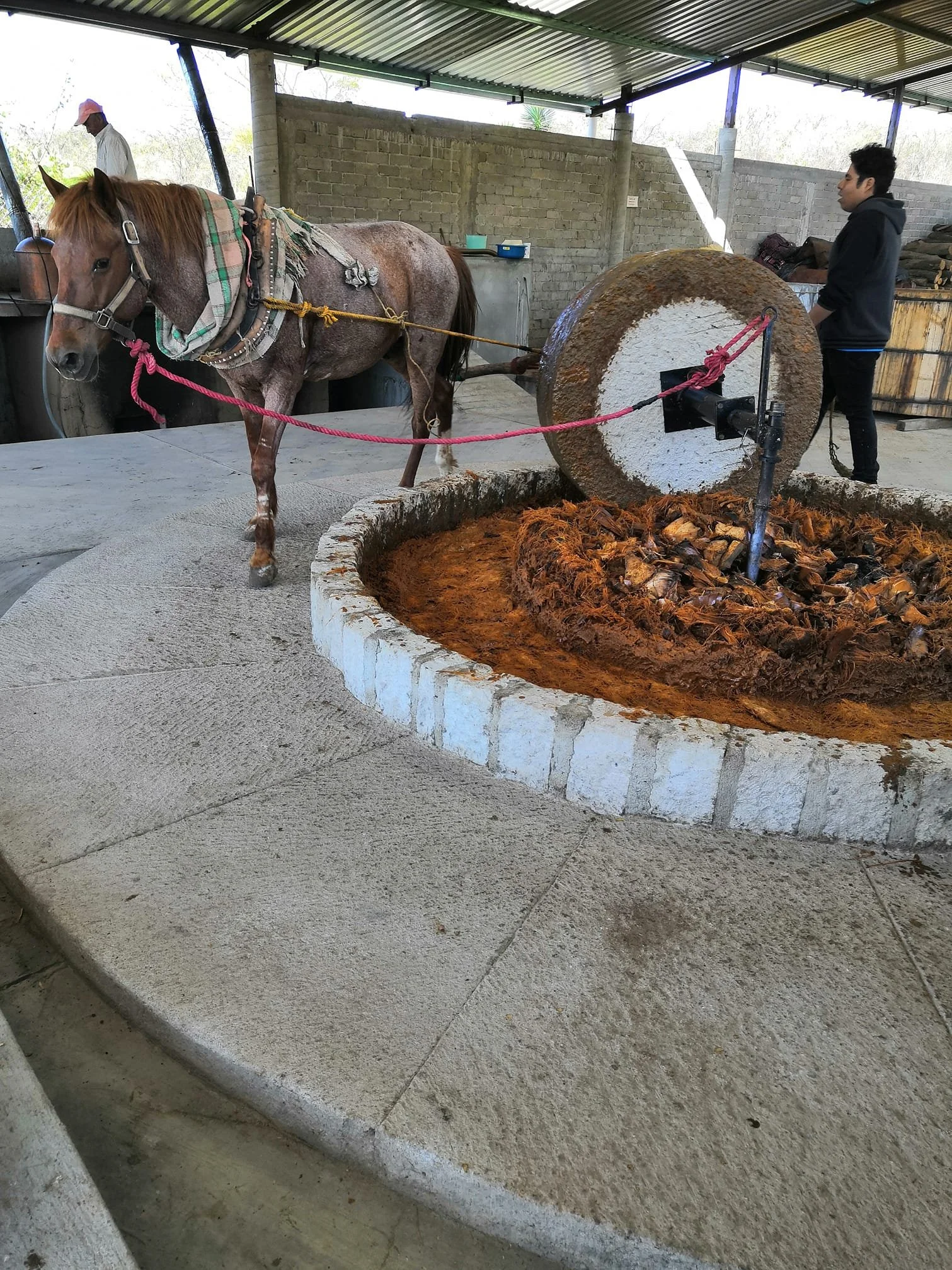
3. Crush the roasted agave
Once roasted, the agave is crushed to release its juice and sugars. The traditional method uses a tahona, a large stone wheel pulled in a circle by a horse or burro. Some producers crush by hand with wooden mallets. Others use a mechanical shredder.
4. Ferment with wild yeast
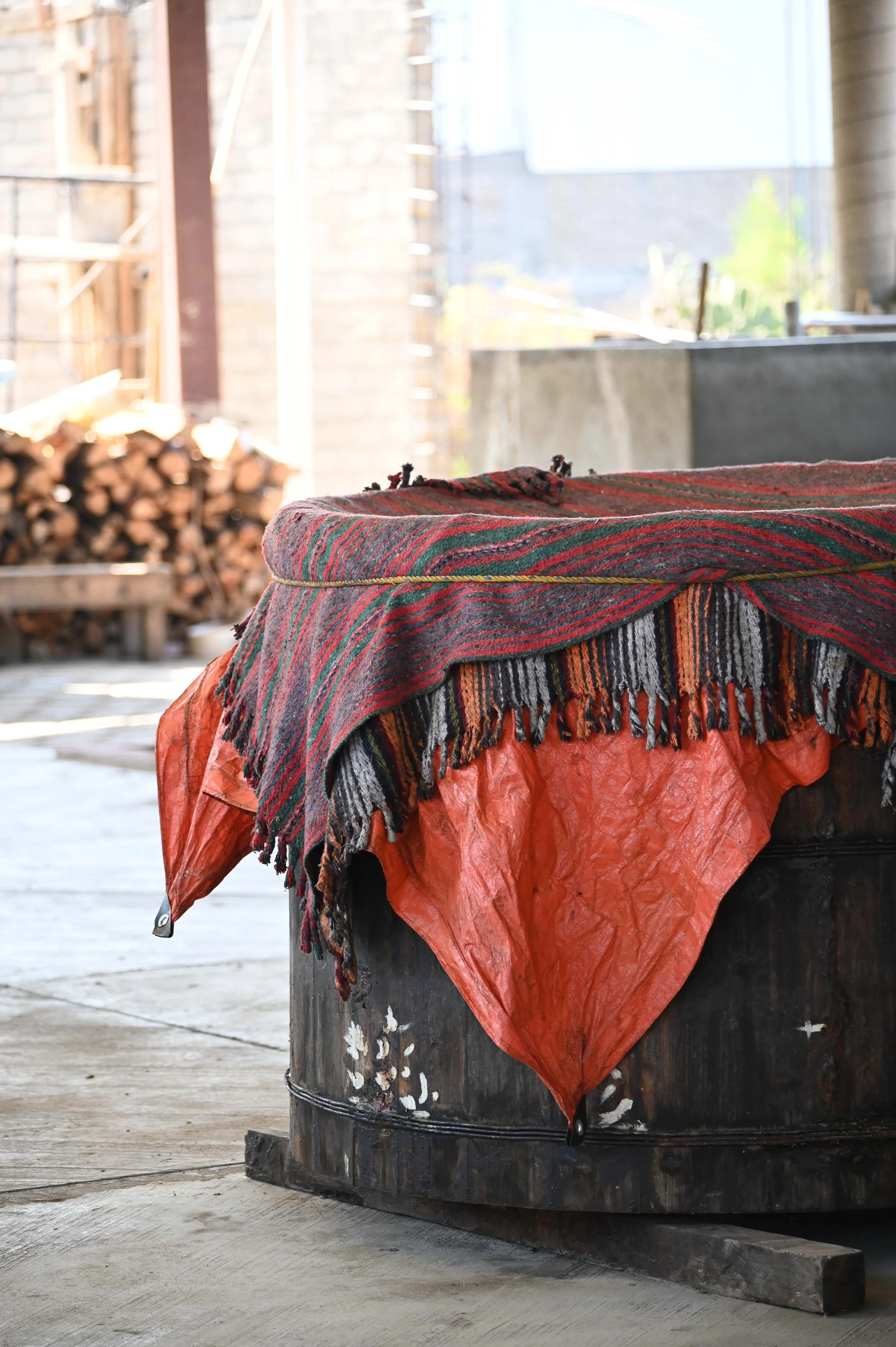
The crushed agave and its juice ferment in open vats, usually for one to two weeks. Producers add water and let wild, airborne yeast do the work. Vats can be made of wood, stone, animal hide or clay. Weather, altitude and the vat material all affect fermentation, which is one reason mezcal varies so much from batch to batch.
5. Distill, usually twice
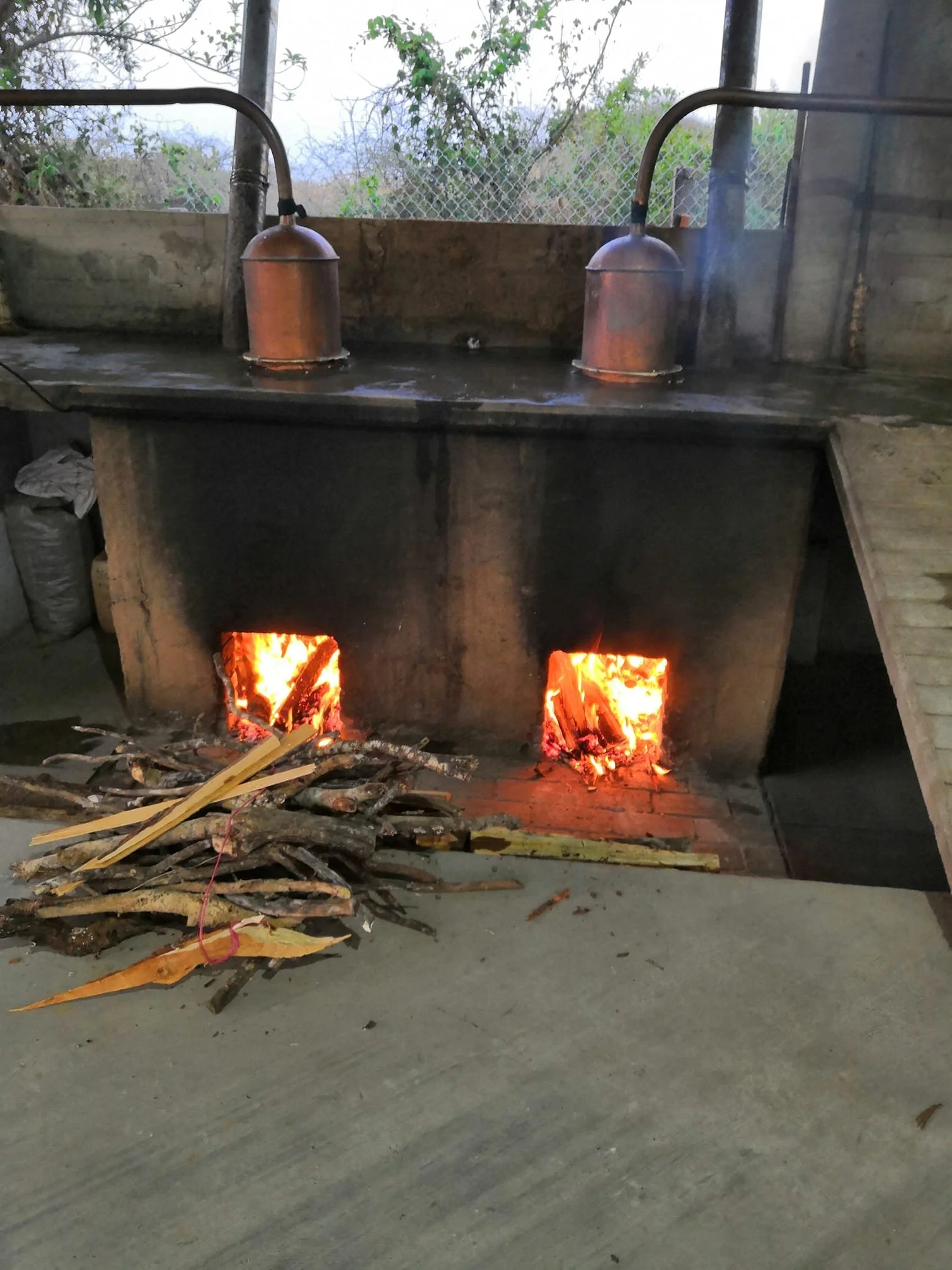
The fermented agave is distilled, typically twice, in copper or clay pot stills. The first distillation produces a low-proof spirit. The second refines it into mezcal. The distiller tastes constantly, deciding which parts of the run to keep. This is where skill matters most.
6. Rest and bottle
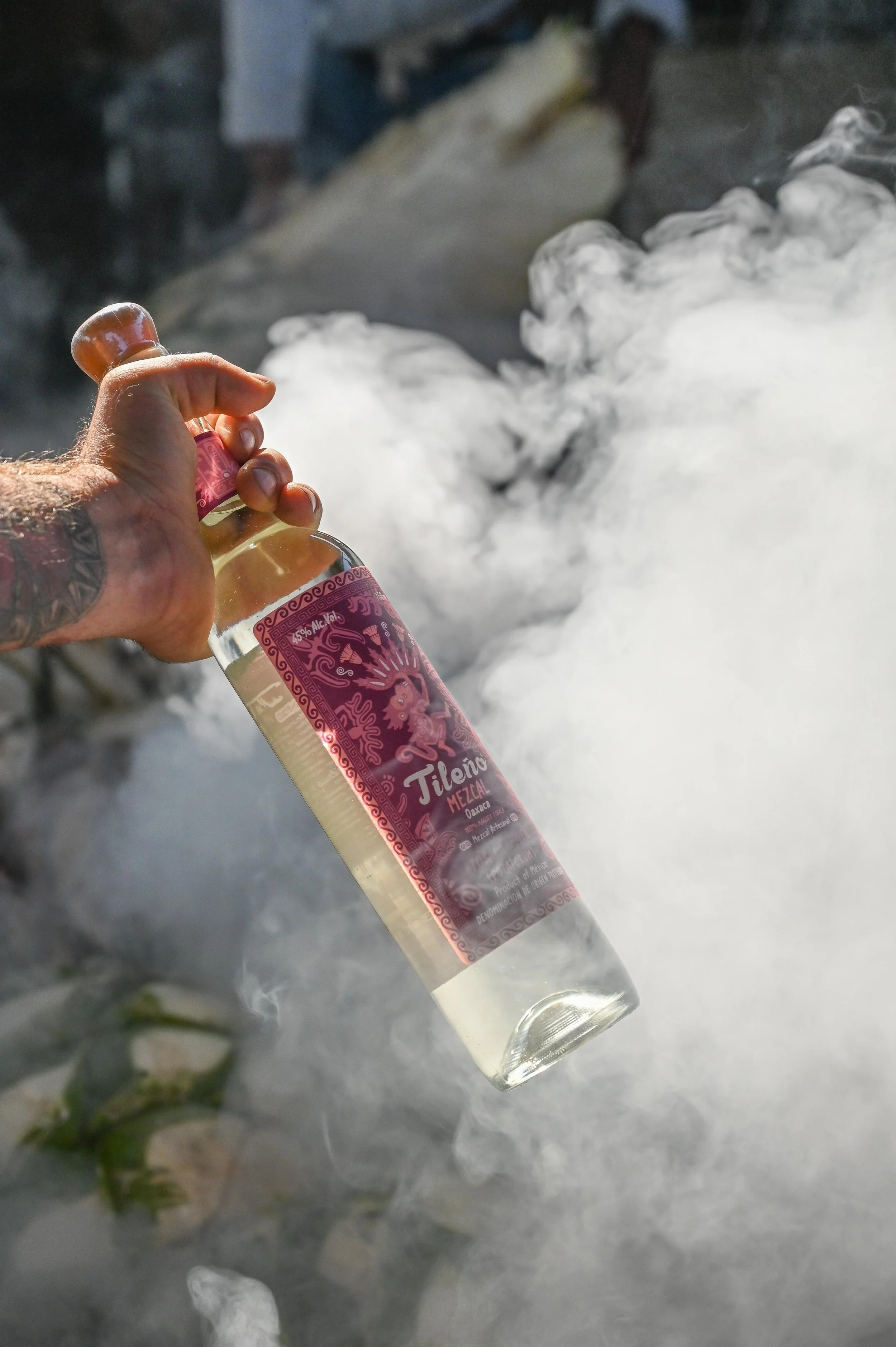
Most mezcal rests briefly in glass or stainless steel before bottling. Unlike tequila, mezcal is usually bottled unaged, or joven, so the flavor of the agave and the roast comes through clearly. Each batch is then bottled, labeled and certified.
What "artisanal" and "ancestral" mean on a label
Mexican regulations sort mezcal into three categories based on how it's made.
Mezcal: The broadest category. Producers may use modern equipment like steam ovens, industrial shredders and stainless steel stills.
Mezcal Artesanal: Agave is roasted in pits, crushed by hand, tahona or mill, and distilled in copper or clay pot stills. Most premium mezcal falls here.
Mezcal Ancestral: The most traditional. Agave is roasted in pits, crushed by hand or tahona, and distilled only in clay pots over direct fire.
All three must be 100% agave.
Why the process matters
Every choice a mezcalero makes shows up in the glass. The type of wood changes the smoke. The length of the roast changes the sweetness. Wild yeast and open-air fermentation add fruit and funk. The still shapes the body and texture.
That's why we think of mezcal as closer to wine than to most spirits. The plant, the place and the people all matter. When you taste a Tileño Espadín next to a Tobalá or Tepeztate, you're tasting years in the field and days at the pit.
Frequently asked questions
How long does it take to make mezcal?
The production itself takes a few weeks: several days to roast, one to two weeks to ferment, then distillation. But the agave takes 6 to 25 years or more to grow before any of that starts.
What is a palenque?
A palenque is a traditional mezcal distillery, usually small and family-run. It's where the agave is roasted, crushed, fermented and distilled.
Why is mezcal smoky?
The agave is roasted in an underground pit heated by wood and hot stones. The smoke from that fire is absorbed by the agave and carries through to the finished spirit.
What is a tahona?
A tahona is a large stone wheel used to crush roasted agave. It's traditionally pulled by a horse or burro.
How much agave does it take to make a bottle of mezcal?
It varies by species and producer, but it often takes several kilograms of agave to make a single liter. Smaller wild agaves need even more plants per batch.
Is mezcal aged?
Most mezcal is bottled unaged, known as joven or blanco. Some producers also offer reposado or añejo mezcal aged in barrels, but unaged mezcal shows the agave most clearly.