

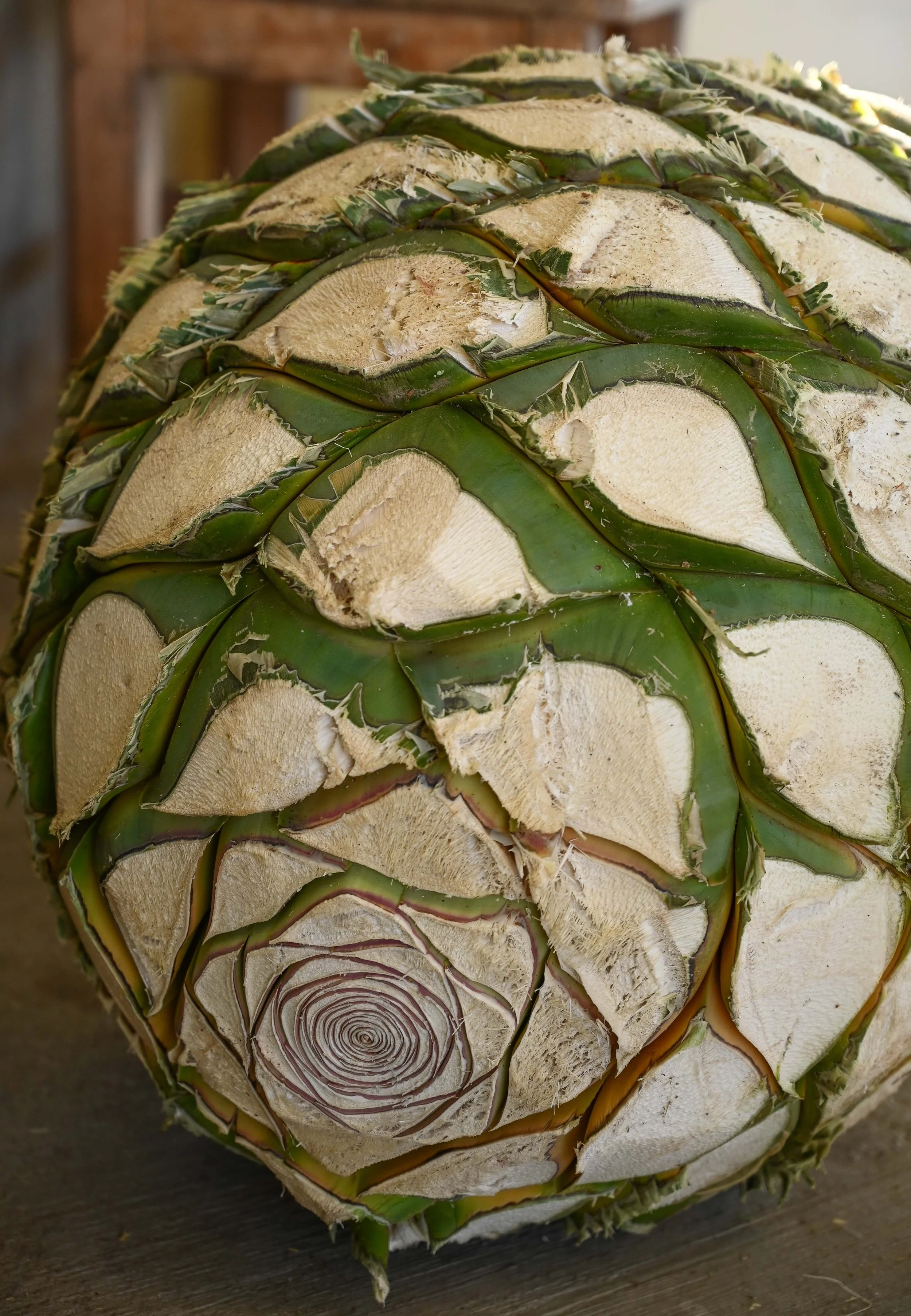
Espadín, Tobalá and Tepeztate are three different agave species, and each makes a distinct mezcal. Espadín is cultivated and matures in about 6–8 years, giving a bright, balanced spirit. Tobalá and Tepeztate are wild agaves that take 12 to 25+ years to mature, so they are rarer, lower-yielding and more expensive.
Most people meet mezcal through Espadín. It accounts for the large majority of mezcal made in Oaxaca. Tobalá and Tepeztate are where mezcal gets interesting: plants foraged from mountainsides, harvested once in a generation, and distilled in small batches.
Tileño makes all three, and more varieties, but currently just these three are available in the United States. Here's how they differ, what each tastes like, and which one to pour first.
What is Espadín mezcal?
Espadín is mezcal made from Agave angustifolia, a cultivated agave that matures in about 6–8 years. It is the most widely planted agave in Oaxaca and the backbone of the category.
Because Espadín is farmed, producers can plant it in rows, harvest on a schedule and keep quality consistent. That's why it's the most affordable mezcal on most shelves. Affordable doesn't mean simple: a well-made Espadín shows roasted agave, citrus peel and a clean, gentle smoke.
Espadín is also a close relative of blue Weber agave, the only agave allowed in tequila. Many botanists consider blue Weber a domesticated descendant of Agave angustifolia.
Tileño Espadín is the bottle we reach for in a mezcal Negroni or a Oaxacan Old Fashioned.
What is Tobalá mezcal?
Tobalá is mezcal made from Agave potatorum, a small, mostly wild agave that takes 12–15 years to mature. It grows in rocky, high-altitude terrain, often in the shade of oak and pine.
Tobalá is sometimes called the "king of mezcal." The plant is small, so it takes many piñas to fill a single roasting pit, and each one yields little juice. It also reproduces mainly by seed rather than shoots, which makes it hard to farm at scale. Much of it is still foraged by hand.
The result is one of mezcal's most aromatic styles: floral, fruity and mineral, with a soft, rounded body and less aggressive smoke than many Espadíns.
Tileño Tobalá is meant to be enjoyed neat, at room temperature, in a small glass or copita.
What is Tepeztate mezcal?
Tepeztate (also spelled Tepextate) is mezcal made from Agave marmorata, a wild agave that can take 15 to 25 years or more to mature. It is one of the slowest-growing agaves used for mezcal.
Tepeztate clings to cliffs and steep canyon walls, so harvesting it means climbing, cutting and carrying heavy piñas out by hand or by burro. A plant harvested today may have taken root before the person cutting it was born. When it does mature, it sends up a tall stalk of bright yellow flowers, and then dies.
In the glass, Tepeztate is bold and distinctive: green and vegetal, with black pepper, fresh herbs and a long, spicy finish. It's the agave mezcal lovers reach for when they want something no one else at the table has tried.
Tileño Tepeztate is meant for sipping, slowly.
Why do Tobalá and Tepeztate cost more?
Wild agave mezcal costs more because of time, scarcity and labor. An Espadín bottle reflects about seven years of growth; a Tepeztate bottle can reflect more than twenty.
Time: A wild plant ties up land and waiting for two to three times as long as a cultivated one.
Scarcity: Wild agaves can't be planted in rows on demand. Each harvest removes plants that took decades to grow, so responsible producers limit how many they take.
Labor: Wild piñas are found, cut and hauled out of rough terrain by hand.
Yield: Smaller or more fibrous piñas produce less mezcal per plant, so each batch is small.
When you pay more for Tobalá or Tepeztate, you're paying for a plant that took a decade or two to make, and for the people who brought it down the mountain.
Which one should you try first?
Start with Espadín, move to Tobalá, and save Tepeztate for when you know what you like.
New to mezcal: Espadín. It's approachable neat and works in any cocktail that calls for tequila or whiskey.
Want something softer and more aromatic: Tobalá. Its floral, fruity profile wins over people who think mezcal is all smoke.
Want something bold and rare: Tepeztate. Green, peppery and unlike anything else on the back bar.
Hosting a tasting: Pour all three side by side, in that order. Tasting the same producer across three agaves is the fastest way to understand what agave species contributes.
Frequently asked questions
Is Tobalá better than Espadín?
Not better, different. Tobalá is rarer and more aromatic; Espadín is more versatile and affordable. The best choice depends on whether you're sipping or mixing.
Is it spelled Tepeztate or Tepextate?
Both are correct. The name comes from Nahuatl, and producers spell it either way. Tepeztate is the more common spelling in the US.
Is wild agave mezcal sustainable?
It can be, when producers harvest selectively and replant. Ask any brand how it sources wild agave. Tileño uses sustainable harvesting practices.
Can you use Tobalá or Tepeztate in cocktails?
You can, but most of their nuance gets lost. Use Espadín for cocktails and sip the wild agaves neat.
How should you drink mezcal?
Neat, at room temperature, in small sips. Many people pair it with orange slices and sal de gusano (worm salt).